
Springettsbury Previous Residents Across Eras
Previous residents research has an era problem as well as an address problem. The present assessment record can anchor the current parcel. The Recorder can move the title trail backward. Township reports can date known changes. York County repositories then take over where the question becomes an older household, death notice, estate, or historical locality. The same address may be written differently across those sources, so record both the source date and the form of the address.
| Source | Years it covers | Where held | What it adds |
|---|---|---|---|
| Assessment parcel record | Current public system; older online span not stated | Board of Assessment portal or counter | Current parcel, owner lead, situs, and legal-description clues |
| Recorder channels | Landex deeds/miscellaneous 1944 forward; IQS 1749-1980; historic deed path 1749-1943 | Recorder, online channels, and office counter | Recorded owners, dates, and document trail |
| Township permit report | Posted periodic reports, including the reviewed 2024 example | Community Development and RTKL route | Property work, date, status, and contractor lead |
| Federal census | 1790-1950 publicly released | Federal and library research channels | Historical household and locality context |
| History Center and Archives | Collection-specific years | York County History Center and York County Archives | Directories, maps, death index, wills, and county series |
Start with the era nearest the question. A recent transfer belongs in the Recorder path. An older household needs a dated directory or census check after the parcel trail is set. An apparent source gap is not proof that no one was connected with the address.
Springettsbury Previous Residents Need a Parcel
A street number is a useful start, but a parcel and legal description are the safer foundation for previous residents work in Springettsbury Township. The York County assessment search can relate an address to a parcel record when live. The site was under maintenance during inspection, so the Board of Assessment counter at 28 E. Market Street, Room 105, York, PA 17401-1585, telephone 717-771-9232, is the fallback for a current record.
Keep three fields in the research log: situs address, owner mailing address, and legal description. The situs is the physical parcel location. A mailing address is correspondence, not physical presence. The legal description is the land identifier used to match the right deed when a subdivision, route, or street label changes. Add the parcel number, deed book/page or instrument number, recording date, and the spelling of each party as the trail moves backward.
Use the York County Property Viewer to confirm the parcel and municipal context before treating a York postal address as a Springettsbury Township location.
York County Deeds for Previous Residents
The deed chain identifies recorded ownership, not every past household. Begin with the current acquisition document and compare its legal description to the assessment parcel. A grantor is the party transferring property. A grantee is the party receiving it. When the seller in one deed later appears as a grantee on an earlier deed, that earlier record can extend the title chain if the legal description and lot details still match.
- Confirm the current parcel, owner name, situs, and legal description in assessment material or at the Board counter.
- Find the current owner or entity in the York County Online Record System and identify the matching acquisition.
- Record the grantor, grantee, recording date, document number, book/page when available, and legal description.
- Search the prior seller as grantee, then repeat only after the property description still matches the same parcel or predecessor lot.
- Move to the Recorder counter, historical index path, or York County Archives for a missing older document or related estate clue.
- Grantor and grantee
- The party giving an interest and the party receiving it in a recorded document.
- Chain of title
- The sequence of recorded transfers matched to the same land description over time.
- Legal description
- The land description that tests whether two deeds concern the same property even when the street address differs.
Open the York County deed index and read its public-service notice before treating a result as complete.
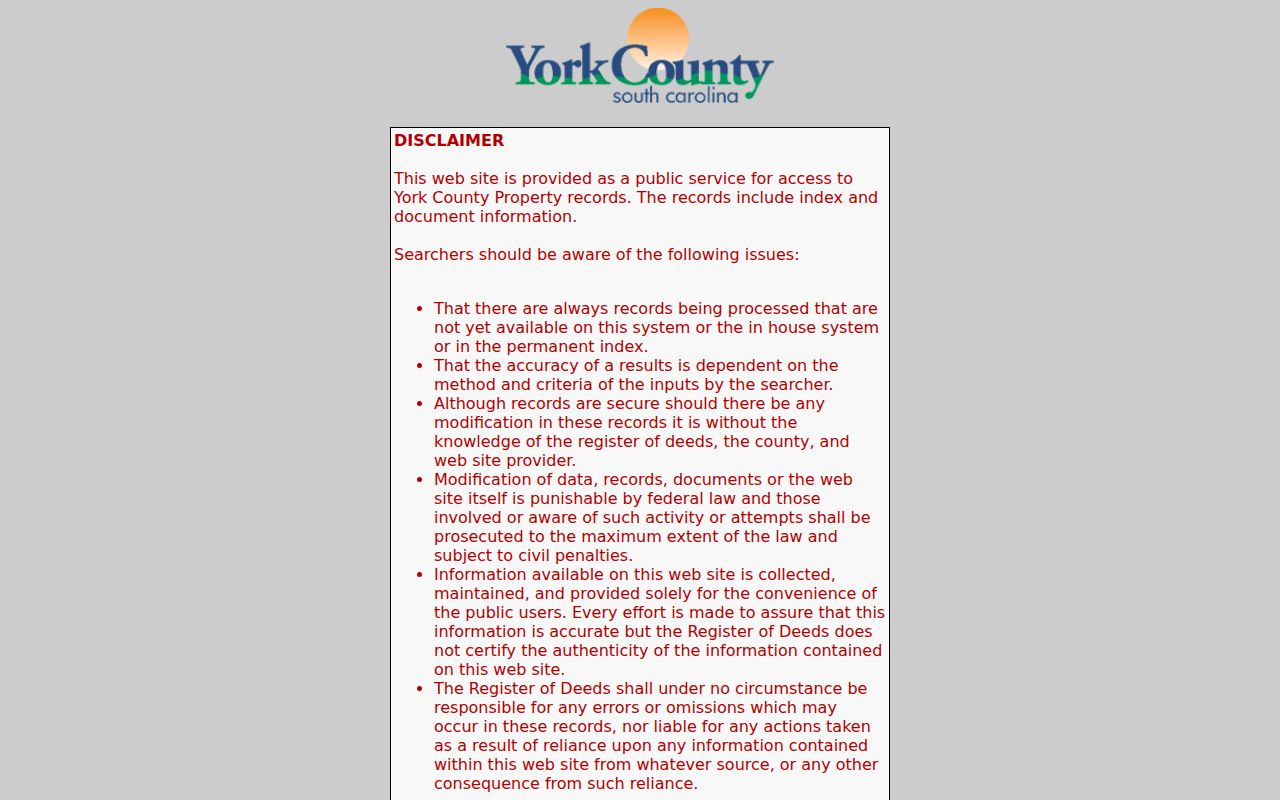
The Recorder warns that processing records may be absent from online, in-house, or permanent indexes at a given moment and that online information is not certified. Verify a key result through the custodian.
Note: Overlapping recorder channels have different date ranges, so write down which channel was searched before calling a document missing.
Springettsbury Previous Residents in Permit Records
Permit records can place a physical change on the timeline for previous residents research. The Township’s posted monthly report includes Permit Type, Permit Number, Issued Date, Property Address, Description of Work, Status, and Primary Contractor. Those exact fields can help date construction, an addition, repair, or a named project. They do not identify every person who lived at the property or provide a complete account of the address.
For an older permit, occupancy, zoning, inspection, or code file, use Springettsbury’s Right-to-Know request route or arrange a departmental file review. Identify the address, record type, and date range. The Township accepts written requests by email, mail, fax, or hand delivery, and asks requesters to seek existing records rather than answers to broad questions. Its standard response period is five business days, subject to a permitted extension.
| Permit-record step | Use and limit |
|---|---|
| Best permit use | Place an address change or work item in time beside the deed and directory trail. |
| Request detail | Give the property address, relevant date range, and existing file type. |
| Record boundary | A posted report is periodic and does not prove a complete address history. |
Springettsbury Previous Residents in Directories
The York County History Center is the key local access route once the deed chain yields a surname, time period, or older address form. Its holdings include York City and County directories, Polk directories, maps, newspaper microfilm, yearbooks, family files, church-derived vital cards, cemetery cards, and a York County newspaper death index for 1783-1909. Ask staff whether a specific volume includes the locality and whether a reverse or criss-cross section exists. A separate online run of reverse directories has not been verified, so do not assume an address lookup is available for every year.
- Bring the parcel, exact address form, surname spelling, and approximate year to the History Center.
- Request the named directory year and record publisher, volume, page, locality heading, and any actual address section.
- Compare adjacent directory editions for spelling variants, married or widow references, and address changes.
- Pair the directory date with the closest released federal census year, then test a household claim with a deed, death-index, estate, or map source.
- Mark an unlisted year as a source gap unless the requested volume has been checked and its locality coverage is known.
The collections themselves are described in the Springettsbury Township Directory Book; the address trail uses them here as dated household evidence rather than as a complete modern directory.
Consult the York County History Center research page for the reading-room and research-order route.
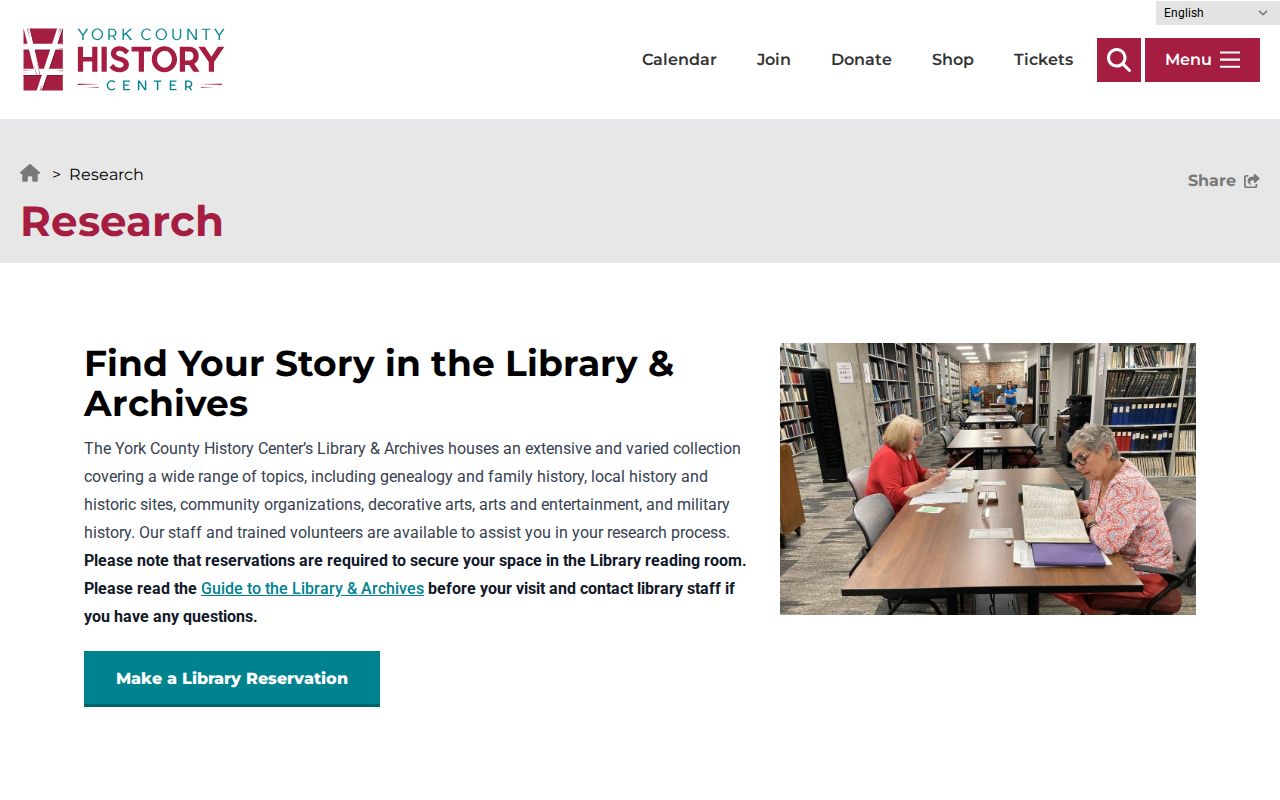
The History Center asks visitors to contact staff in advance so requested material can be pulled. Its research order has a published minimum fee and a stated two-to-four-week processing estimate.
Previous Residents Before Springettsbury
Historic locality terms change the search for previous residents. Present-day Springettsbury was part of Hellam Township from 1739 to 1822 and Spring Garden Township from 1822 to 1891. Springettsbury formed in 1891. An address trail that begins only with the later Township name can miss an earlier deed, tax abstract, map, census entry, or directory reference filed under Hellam or Spring Garden.
Use the historic name beside the current parcel description, not in place of it. The Township’s historical materials, York County History Center maps, and county archive records can help reconcile an old road, route, or locality label. No Townshipwide dated renumbering schedule was verified, so a claimed old-to-new number conversion needs an actual plat, map, planning record, or deed match.
Springettsbury Previous Residents in 1860
For a much older Springettsbury trail, the York County History Center’s special publication no. 84 is unusually specific. Locations of Residents of Springettsbury (Then Spring Garden) Township in 1860 is a 49-page correlation of the 1860 census, the 1860 Shearer Map, and 1930s aerial photographs. It includes annotated maps, a surname index, sources, and deed, family, and aerial correlations. It is evidence to compare with a parcel and surname trail, not a shortcut that proves a modern street address.
Review the History Center collections and database route before requesting a source, map, or publication.
The collections route is a useful way to identify a repository or staff contact, while the publication itself supplies the local 1860 correlation that must be read with its cited sources.
Close a Springettsbury Previous Residents Trail
An old address trail often ends in an estate, death notice, or county archival series rather than another deed. York County Archives lists will books from 1749 to 1973 and indexed Dockets A through AA. The York County History Center’s newspaper death index spans 1783 to 1909. The Register’s historical-estate path divides older materials between Archives and later material at the Judicial Center. These sources can test a name, date, family connection, or locality after the property chain reaches a likely end point.
Keep a source log with document reference, page, image or file citation, date checked, address form, and result. Conflicting names may be different people, an estate or trust, a former owner, or a source error. A final match should rest on at least the parcel/legal description and one dated household or estate source.
Lawful use. Previous-resident research is appropriate for house history, family history, estate questions, and personal curiosity. Do not use address trails to stalk, harass, intimidate, or harm anyone.